
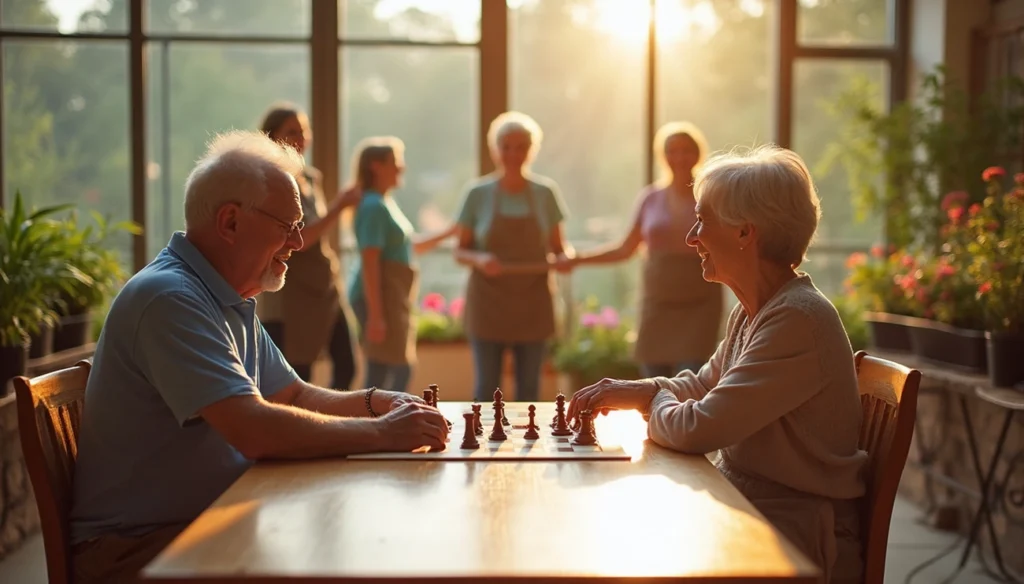
Direct answer: The best activities for seniors put you with the same people every week. They also ask something of your body or your mind. Bingo covers the people part, so pair it with one thing that gets you moving and one thing that gives you a job to do.
Bingo has lasted for a reason. It is social, and it runs on a set schedule. It rarely pushes you, though, and that push is where much of the health benefit comes from.
There is a real health reason to get this right. A National Academies report, published on the NIH Bookshelf, found that about 24% of Americans 65 and older who live in the community are socially isolated.
If you are reading this at the kitchen table, worried about a parent who has stopped leaving the house, take a breath. You can fix this, and the fix usually starts with one small, specific plan.
In my 18 years in lead generation, I learned that vague offers lose and specific ones win. Telling someone to get more active goes nowhere. A walking group at the library parking lot, Tuesdays at 9 a.m., gets people out the door. This guide helps you get that specific.
What makes a good activity for seniors?
A good activity scores well in at least one of three columns:
- People: you see the same faces on a regular schedule.
- Body: you move, build strength or work on balance.
- Purpose or Mind: you learn something hard, or someone counts on you.
No single activity has to do everything. A good week mixes two or three that cover different columns.
Swipe sideways to see every column.
| Activity | People | Body | Purpose or Mind |
|---|---|---|---|
| Bingo | High | Low | Low |
| Walking group | High | High | Low |
| Tai chi or balance class | Medium | High | Medium |
| Volunteer shift | High | Varies | High |
| Bridge or chess club | High | Low | High |
| Community choir | High | Low | High |
A quick way to use the table: pick one activity that is high on People and one that is high on Body. Then add one that is high on Purpose or Mind. That covers most of what the research points to.
Why does connection count as a health habit?
The CDC says social isolation and loneliness raise a person’s risk of these problems:
- Heart disease and stroke
- Type 2 diabetes
- Depression and anxiety
- Dementia
- Earlier death
The CDC also lists older adults among the groups at higher risk of isolation.
The two words mean different things. Social isolation means having few relationships or little contact with other people. Loneliness is the feeling of being alone. You can be isolated and feel fine. You can also feel lonely in a full room.
The National Academies report linked social isolation to about a 50% higher risk of dementia. That finding comes from observational studies. It does not prove that a book club prevents dementia. It is still a strong reason to treat time with people like a daily walk, as something you do on purpose.
What does the federal guidance say about staying active?
The CDC sets weekly activity targets for adults 65 and older. Here is the short version.
Swipe sideways to see every column.
| Type | CDC weekly target | Easy example |
|---|---|---|
| Aerobic | At least 150 minutes of moderate activity | Brisk walk, 30 minutes, 5 days |
| Muscle strengthening | At least 2 days | Resistance bands or a chair exercise class |
| Balance | Activities that improve balance | Tai chi or standing on one foot near a counter |
If those numbers feel out of reach, the CDC says to be as active as your health allows. Some activity beats none. Start with 10 minutes and build from there.
Balance deserves extra attention. The CDC reports that more than 1 in 4 older adults falls each year. Weak legs and trouble with balance are among the risk factors you can change. Sore or numb feet can make walking less steady as well. See our guide to senior foot care at home for a simple daily routine. The Administration for Community Living funds falls prevention programs for adults 60 and older. These include tai chi and group balance classes.
On the mind side, the National Institute on Aging reviewed research on hobbies and healthy aging. In one study, older adults who spent at least an hour a day reading or on hobbies had a lower dementia risk than those who spent under 30 minutes. NIA also notes that a community choir program reduced loneliness in older adults.
NIA suggests activities that give you purpose, such as volunteering or a part-time job. AmeriCorps Seniors is a federal program for people 55 and older. It has three tracks:
- RSVP: you pick where and how often you serve. You might tutor kids, deliver food or help with disaster recovery.
- Foster Grandparent Program: you mentor children with exceptional needs. Volunteers who meet income limits get a small hourly stipend.
- Senior Companion Program: you help older adults with tasks like shopping, so they can stay at home. The same stipend rules apply.
Is staying busy enough?
The usual advice is to fill the calendar. I push back on that. A full calendar can still leave a person lonely, and a packed schedule wears out fast.
If you are busy but still lonely
Loneliness depends on how close you feel to people, not how many events you attend. Pick smaller groups where you see the same people every week. Friendship after 60 usually grows from repetition and a shared task. You bond with the people you see every Tuesday.
If groups are not your thing
Start one on one. Walk with a single neighbor. Tutor one child at the library. Many quiet people do better with a job to do than with open mingling.
If someone sells you a brain game
Be wary of any product that claims to prevent dementia. The research shows links, not proof. What seems to matter is a real challenge, done with other people when possible. A bridge club costs little and gives you both.
If money is tight
Most good options cost little or nothing. Libraries run book clubs and language groups for free. Many senior centers serve group meals funded under the Older Americans Act for people 60 and older, often for a suggested donation.
Where the money goes
Activities get used as bait in two markets I know from the inside.
The first is Medicare Advantage. In my 18 years in insurance marketing, I have seen ads lead with gym perks because a smiling person at a pool sells. A fitness benefit is nice. It should not drive your plan choice.
Here is a worked example. With a Medicare Advantage plan, you still pay your Part B premium. In 2026 the standard amount is $202.90 a month. That comes to $2,434.80 a year before the plan’s own costs. Your doctors and drug coverage affect your money far more than a free gym card does.
Balance classes can also protect your wallet. Say a fall puts you in the hospital and you then need rehab in a skilled nursing facility. Under Original Medicare in 2026, you pay a $1,736 Part A deductible. Rehab days 1 to 20 cost $0. Days 21 to 100 cost $217 a day. A 30-day rehab stay means 10 days at $217, which is $2,170. Add the deductible and you owe $3,906. A free tai chi class looks very different next to that number.
The second market is senior living. Tour guides hand out a packed activity calendar because it closes sales. Ask how many residents actually go to each event. A long list means little if three people show up.
Related: if a move is on the table, read when to move to assisted living, home care vs assisted living and affordable senior independent living.
Seven moves to find activities near you this week
- Call the Eldercare Locator. Dial 1-800-677-1116 or search eldercare.acl.gov. It connects you to your local Area Agency on Aging, which knows the senior centers, classes and meal sites near you.
- Pick your columns. Choose one People activity and one Body activity. Add a Purpose or Mind activity once those feel normal.
- Check two calendars. Look at your library’s events page and your parks department’s programs for adults 55 and older.
- Search for volunteer roles. Use the AmeriCorps Seniors Pathfinder tool or Volunteer.gov for parks and public lands.
- Solve the blockers first. Hearing, vision, rides and fear of falling keep many people home. Ask your Area Agency on Aging about senior ride programs.
- Write it down as a plan. Put the day, time and place on paper. Tape it to the fridge.
- Give it three visits. The first visit is awkward for almost everyone. By the third, people know your name.
If you have a Medicare Advantage plan, also check your Evidence of Coverage for fitness benefits. Planning a trip with a group? See our senior travel planning checks.
What not to do as the adult child
Do not sign a parent up without asking. Change works best when it is their idea, so start with what they used to love. A former teacher may want to tutor. Offer a ride to the first few visits, go once together, then step back. Watch for bigger signs, like poor sleep or losing interest in everything. Those can point to depression, and that is a talk for their doctor.
Frequently asked questions
What are good activities for seniors with limited mobility?
Chair exercise and seated tai chi work well for many people with limited mobility. Water exercise takes pressure off sore knees and hips. Book clubs, card games, choirs and phone-based volunteering need little movement and still connect you with people. Many senior centers offer adapted exercise classes. Ask your doctor or a physical therapist which movements are safe for you before you start something new.
How much exercise do seniors need each week?
The CDC recommends at least 150 minutes of moderate aerobic activity a week for adults 65 and older. Add muscle-strengthening activity on at least 2 days, plus activities that improve balance. If you cannot reach those targets, do what your health allows. Some activity is better than none. Many people start with 10 minutes a day and add a little each week.
Where can I find free activities for seniors near me?
Start with your local senior center, your public library and your parks and recreation department. Most offer free or low-cost classes and groups. The Eldercare Locator at 1-800-677-1116 connects you to your Area Agency on Aging. That office tracks local programs, group meals and ride services, so one call can turn up several options.
Can puzzles or brain games prevent dementia?
No activity has been proven to prevent dementia. Research links hobbies, learning and social activity with lower risk, but those links come from studies that cannot prove cause and effect. Skip products that promise prevention. Choose activities that challenge you and that you will keep doing. Doing them with other people adds the social benefit too.
What if I feel lonely even when I am busy?
Loneliness depends on how close you feel to people, not how many activities you do. Look for small groups where you see the same faces each week, and set up regular one-on-one time with a friend. If loneliness comes with hopelessness or thoughts of self-harm, call or text 988 at any hour to reach the 988 Suicide and Crisis Lifeline.
Your next step
Pick one activity from the table that fits you today. Write down the day, time and place. Then call the Eldercare Locator to find where it meets near you, and plan to go three times before you decide.

Sources
- CDC: Physical Activity Guidelines for Older Adults
- CDC: Social Connectedness
- CDC: Older Adult Fall Prevention
- National Institute on Aging: Participating in Activities You Enjoy As You Age
- National Institute on Aging: What Do We Know About Healthy Aging?
- NIH Bookshelf: Social Isolation and Loneliness in Older Adults
- Administration for Community Living: Falls Prevention
- Medicare.gov: Medicare Costs