
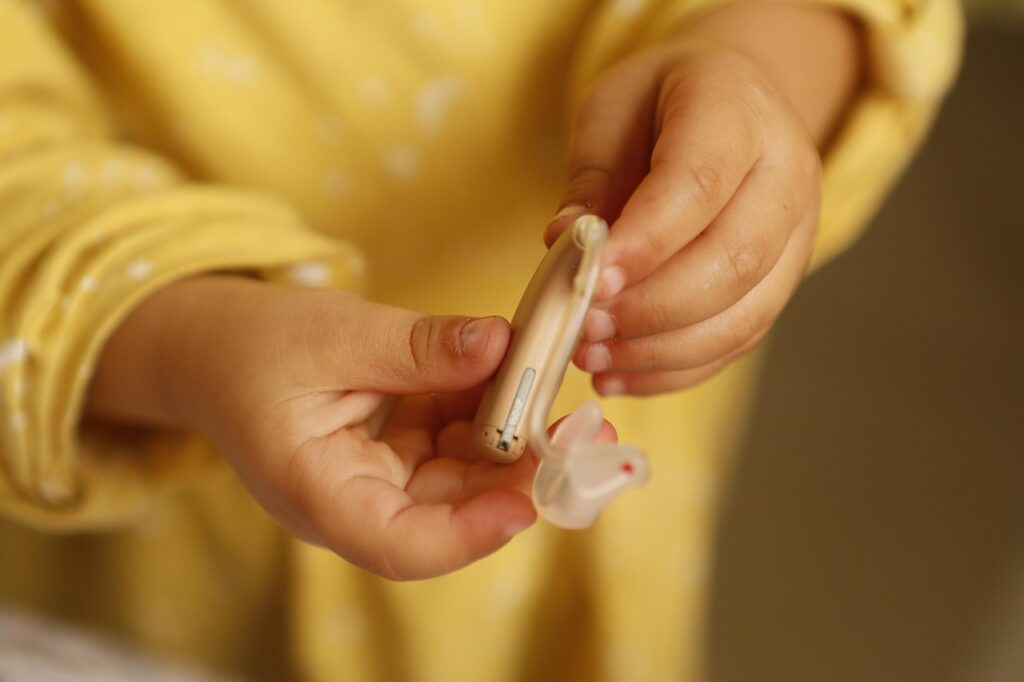
Direct answer: Over-the-counter (OTC) hearing aids are for adults 18 and older who think they have mild to moderate hearing loss, and you can buy them without an exam. Prescription hearing aids go through a licensed professional, who fits them to your test results, and they can treat any level of loss. Original Medicare does not pay for either kind. Check your return window and your plan’s benefits before you buy.
Since October 17, 2022, you have been able to buy hearing aids off a store shelf or online. That made them much easier to get. It did not make Medicare pay for them.
So the real choice comes down to fit and cost. OTC aids cost less up front, but you set them up yourself. Prescription aids cost more, and a professional tunes them to your hearing test.
If you are reading this at the kitchen table because a parent keeps turning the TV up, take a breath. Hearing loss can be helped, and you have time to do this the right way.
You are also far from alone. The National Institute on Deafness and Other Communication Disorders (NIDCD) reports that about one in three people ages 65 to 74 has hearing loss. Nearly half of people over 75 have trouble hearing.
What is the difference between OTC hearing aids, prescription aids and PSAPs?
There are three kinds of products on the shelf, and the boxes can look a lot alike.
An OTC hearing aid is a medical device regulated by the FDA. It is for adults with perceived mild to moderate loss. Perceived means you judge your own hearing. Nobody has to test you first.
A prescription hearing aid is any hearing aid that does not meet the OTC rules. You get it through a licensed professional, usually an audiologist or a hearing aid dispenser. They program it to match your measured loss.
PSAP stands for personal sound amplification product. The FDA says PSAPs are for people with normal hearing who want sounds louder in certain settings, like birdwatching. They are not meant to treat hearing loss.
Swipe sideways to see every column.
| OTC hearing aid | Prescription hearing aid | PSAP | |
|---|---|---|---|
| Who it is for | Adults 18+ with perceived mild to moderate loss | Any age, any level of loss (based on the device) | People with normal hearing |
| Exam needed first? | No | Yes, through a licensed professional | No |
| Who sets it up | You, often with a phone app | The professional | You |
| Treats hearing loss? | Yes | Yes | No |
Why does the FDA split hearing aids this way?
The FDA created the OTC category so more people could get help without a costly visit first. The trade-off is power. OTC aids have limits on how loud they can get.
That limit matters. If you can’t follow speech even in a quiet room, the FDA says you should see a licensed hearing professional. The same goes if loud sounds are hard to hear. OTC aids are not built for severe loss.
It also helps to know what any hearing aid can do. Most age-related loss comes from damage to tiny hair cells in the inner ear. Hearing aids make sound louder so the hair cells you still have can pick it up. The FDA notes that hearing aids usually do not bring hearing back to normal.
Some signs mean you should see a doctor before buying anything. An ear, nose and throat doctor (ENT) is best. Watch for these signs:
- Your hearing changed suddenly in the past six months.
- Your hearing is worse in one ear.
- You have ear pain, drainage or blood.
- You feel dizzy or have vertigo.
- You hear ringing in only one ear.
- You have a lot of wax, or something is stuck in your ear.
What does Medicare pay in 2026, and what does it not?
Medicare.gov is direct about this. Original Medicare does not cover hearing aids. It also does not cover exams for fitting them. You pay the full cost.
That rule comes from federal law, Section 1862(a)(7) of the Social Security Act. Buying OTC does not change it.
Testing is a different story. Part B can cover a diagnostic hearing and balance exam if your doctor orders it to see whether you need medical treatment. In 2026, you first meet the $283 Part B deductible. After that, you usually pay 20% of the amount Medicare allows. In a hospital outpatient clinic, you may also owe a facility copay.
Medicare.gov also says you can see an audiologist once every 12 months without a doctor’s order. That only applies to slow, long-term hearing loss. It is still a test, not a fitting.
Swipe sideways to see every column.
| Item | Original Medicare | What you pay |
|---|---|---|
| Hearing aids, OTC or prescription | Not covered | All of it |
| Exam to fit hearing aids | Not covered | All of it |
| Diagnostic exam ordered by your doctor | Part B | $283 deductible, then 20% |
| Cochlear implant | May be covered as a prosthetic if you meet the rules | Part B cost sharing |
Medigap does not fill this gap. It only helps pay your share of services Medicare already covers.
Medicare Advantage plans may offer extra hearing benefits. These are plan add-ons, and each plan sets its own amounts and rules. If you have full Medicaid along with Medicare, your state may cover hearing services. Ask your state Medicaid office. Our guide to Medicaid and assisted living explains more about how Medicaid works for seniors.
A worked example. Say a Medicare Advantage plan has a $0 premium and a hearing extra. You still owe the Part B premium. Medicare.gov lists it at $202.90 a month in 2026. Over 12 months, that comes to $2,434.80. If your 2024 income was above $109,000 (single) or $218,000 (married filing jointly), your Part B premium starts at $284.10 a month.
The fine print that trips people up
Labels that sound official. Words like FDA Registered or FDA Certified on a box can mislead you. Check the outside of the package for the terms OTC and hearing aid. If the box says the product is for people with normal hearing, it is a PSAP.
The return window. The FDA does not require a warranty, so the return period is your real test drive. NIDCD notes many makers allow about 30 to 60 days. Ask which fees you won’t get back.
Store quiet versus real life. Busy restaurants are much louder than a quiet store. Wear the aids out to dinner during the trial. Try them on phone calls, too.
Small hands, small parts. Tiny in-canal aids can be hard to handle with stiff fingers or weak eyesight. Behind-the-ear styles are often easier. Smaller aids may also lack a telecoil. With a telecoil, you can hear the loop systems in some theaters and places of worship.
Hearing loss can look like confusion. NIDCD notes that older adults who can’t hear well may seem confused or withdrawn. Before you assume memory trouble, get hearing checked. If memory is a real concern, our guide to memory care vs assisted living covers the next steps.
Do you really need an audiologist first?
The usual advice says always see an audiologist before you buy. That is good advice for many people, but not for all of them.
When OTC is a fair first step
Your loss feels mild to moderate. None of the warning signs above apply. You are comfortable using a phone app, and you will keep the receipt and the return deadline. In that case, OTC can be a low-cost way to start.
When skipping the professional is a mistake
You struggle even in quiet rooms, or one ear is much worse. Or you tried OTC aids and they did not help enough. Each of these points to a test and a prescription fitting.
When price fools you
NIDCD warns against choosing on price alone. Paying more does not mean a better fit for your ears. The cheapest online deal is not proof of value either.
Where the money goes
In my 18 years in health and insurance marketing, I have watched hearing benefits used as the hook in Medicare ads. The ad leads with free hearing aids. The fine print shows a set dollar allowance. It also limits you to certain brands and a network you have to use.
Agents and call centers are usually paid when you enroll in a plan. That is how the business works. It also means the person on the phone has a reason to talk up the extras. Ask them to show you the hearing section of the plan’s Evidence of Coverage.
Prescription aids are often sold as a bundle. The price may cover the device plus follow-up visits for adjustments. That can be worth it. But I have seen enough pricing sheets to know you should ask for an itemized quote, so you can see what each piece costs.
OTC ads online lean on urgency, like sales that end tonight. With a real return window, you do not need to rush.
The same sales patterns show up in senior housing. Before you sign anything there, read our guides to assisted living costs in 2026 and home care vs assisted living.
Six moves before you buy hearing aids
- Check the warning signs. If any apply, see a doctor or ENT first.
- Ask your doctor for a diagnostic hearing test. If your doctor orders it, Part B can help pay. You will know your level of loss before you shop.
- Pick your path. For mild to moderate loss with no warning signs, OTC is an option. For anything more, ask about prescription aids.
- Read your plan’s hearing benefit. If you have Medicare Advantage, open the Evidence of Coverage. Look up these details. Find the dollar allowance and how often you can use it; See which brands and providers are in network; Check whether you need prior approval from the plan.
- Ask these cost questions:: What is the total price, including batteries or chargers and follow-up visits?; How long is the trial, and which fees are nonrefundable?; How long is the warranty, and does it cover repairs and loaner aids?; Who adjusts the aids if they do not work in noisy rooms?.
- Write the return deadline on your calendar. Test the aids in real places. If you have loss in both ears, ask about two aids. NIDCD says two ears help the brain find where sound comes from.
What not to do
Do not buy a PSAP thinking it treats hearing loss. Do not sign up for a plan only for the hearing extra. If a device hurts you or stops working, report it to FDA MedWatch.
Frequently asked questions
Does Original Medicare cover hearing aids in 2026?
No. Medicare.gov says Original Medicare does not cover hearing aids or exams for fitting them, so you pay the full cost. This applies to OTC and prescription aids alike. Part B may help pay for a diagnostic hearing test your doctor orders. That test can confirm hearing loss, but it does not create a benefit that pays for the device.
Does Part B cover a hearing test?
Sometimes. Part B covers a diagnostic hearing or balance exam when your doctor orders it to see if you need medical treatment. In 2026, you first meet the $283 Part B deductible. Then you usually pay 20% of the amount Medicare allows. Tests done only to fit hearing aids are not covered, even if the same office does both.
Can a Medicare Advantage plan help pay for hearing aids?
It might. Many plans offer hearing extras that Original Medicare does not cover. Each plan sets its own dollar allowance. Plans also limit which brands and providers you can use, so two plans can be very different. Read the hearing section of the Evidence of Coverage before you enroll. You can compare plans on Medicare.gov’s Plan Finder, and you still owe your Part B premium.
Are PSAPs the same as OTC hearing aids?
No. The FDA says PSAPs are for people with normal hearing who want sounds louder in certain settings. OTC and prescription hearing aids are medical devices made to help with hearing loss. The two kinds of boxes can look alike. Read the outside label for the terms OTC and hearing aid before you pay.
Will Medigap pay for hearing aids?
Generally no. Medigap helps pay your share of costs for services Original Medicare already covers, like the 20% coinsurance on a covered test. Since Medicare excludes hearing aids by law, there is no Medicare cost for Medigap to share. If you need help paying, check your Advantage plan options, state Medicaid rules or programs in your area.
Your next step
Start with one phone call to your doctor and ask for a diagnostic hearing test. Once you know your level of loss, the choice between OTC and prescription hearing aids gets much simpler. Then keep the return window open and test the aids in real rooms.

Sources